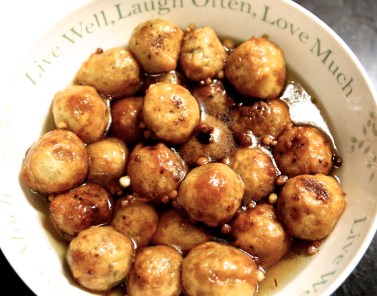
 Poush Parbon, Pongal, Makar Sankranti are just different names for harvest festival celebrated through out India, it marks the beginning of the harvest season. Interesting trivia, this is the only Indian festival that is on the same calendar date every year! Its also known as the ‘Kite Festival’. Preparations would start days ahead as we would collect all types of broken glass to make Manja (abrasive thread used for kite fights) and paper to make personalised colorful Patang (Kites). Growing up I remember waking up to the smell of sweet pongal being cooked at my neighbors house and Koraishutir Kochuri at mine. Walking out to see the colorful display of art in the form of rangoli in front of very house in the neighborhood, flying kites till it was too hot or we were too exhausted, chasing kites and a gathering of all our friends in the evening hosted by my parents.
 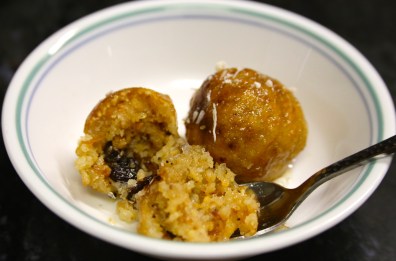 It has always been party time at my house for this festival and my mom always whipped up a big variety delicious food, Gokul Pithe being one of them. My husband has the best description for this, he says this is Narkel Naru (coconut truffle) with Malpua (Indian crepe) wrapped around it.


The recipe below uses All-Purpose Flour and Milk. I also make a vegan and gluten free version of this and it is equally delicious. Just a little different in the final taste. Just replace the all-purpose flour with coconut flour, rice flour and almond flour mixed in equal proportion and use Almond Milk instead of milk for the batter.
Read notes for more info.
Time for Prep: 20 mins | Time to Cook: 15 mins | Yield: 22-25 pieces | Level: Easy
Ingredients:
- For the filling:
- 2 cups grated Coconut
- 4 oz condensed milk*
- 1/2 cup Jaggery or sugar
- For the batter/outer layer:
- 2 cups all-purpose flour*
- 1 tsp ghee or oil
- 1+1 cups whole milk*
- For the syrup:
- 1.5 cups sugar (3/4 cup sugar +3/4 cup jaggery)*
- 1.5 cups water
- 1/2 tsp cardamon powder
- pinch of saffron
- 1 tbsp rose water (optional)
Process:
- Making the stuffing:
- In a heavy bottom pan over medium heat, combine the coconut and jaggery, let the jaggery dissolve completely. Add the condensed milk.
- Cook open over medium heat. Stir occasionally to ensure that the mixture doesn’t stick to the pan until you get a thick mixture. It should be light brown and slightly sticky but should be coming off from the side of the pan easily.
- To check for doneness, take a little bit and shape and see, if it holds form and doesn’t stick to your hands, turn off the heat.
- Once cool, divide into 22-25 equal portion, roll them into small balls and set aside.
- Making the outer layer/ batter:
- In a wide mouthed bowl combine the flour and ghee/oil. Mix it up.
- Add one cup of milk and mix scraping sides to form the batter. Slowly add the remaining milk a couple tablespoon at a time till you get a batter that is similar to that for pancake/fritters/pakodi.
- Making the syrup:
- In a saucepan, combine sugar/ jaggery and water, add cardamon powder. Stir till the sugar/ jaggery is dissolved and boil till one string consistency, around 10 mins.
- Add rose water and stir it in. This just adds to the fragrance and sweetness of the syrup.
- Cooking:
- Heat oil in a frying pan for deep frying.
- Dip a ball of stuffing in the batter, move it around till its well coated. Fry till golden brown (like fritters)
- Remove with a slotted spoon and dunk into the syrup.
Let them soak in syrup for 8-10 mins. Serve Warm or Cold.
Notes:
- For a lactose free (Vegan) version, skip the Condensed Milk in filling and use Almond milk for the outer layer/batter.
- For a gluten free delight instead of all purpose flour use a blend of coconut, almond and rice flour (1:1:1 ratio).
- Traditionally this dish is made with 100% Khejurer gur, a special type of jaggery made with the sap of date palm trees. But its almost impossible to get some in US, so I make this with blend of date sugar and coconut sugar instead. It has the same flavor but easier to find (and a lot healthier).


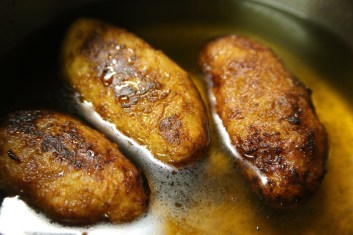 Rangaloor Puli is traditional Bengali dessert made mid January, around Sankranti or Poush Parbon (Harvest festival). Freshly harvested paddy, produce and date syrup in the form of Khejurer Gur (Jaggery) is used to make a variety of delicious goodness like Rangaloor Puli, Payesh,
 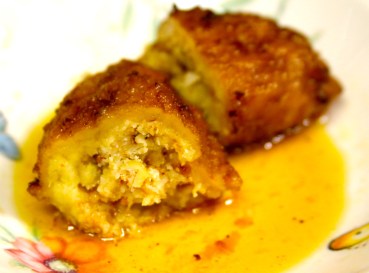 These words from my beloved Jethima (aunt) to my mom says it all – “We got to eat all the traditional Sankranti goodies of Bengal. You were the most hard worked birthday girl I’ve ever seen. We were there in large numbers but you kept filling then rolling out and frying mounds upon mounds of Motorshutir Kochuris. These Kochris were always accompanied by RangaAlur Pethe. Subir my dear devar was ever ready to peel those kilos upon kilos of peas and to grind them in the mixie. What a wonderful couple the two of you made. I shall always cherish those memorable days we spent in and out of one another’s home. With all my love Jharnadi”
 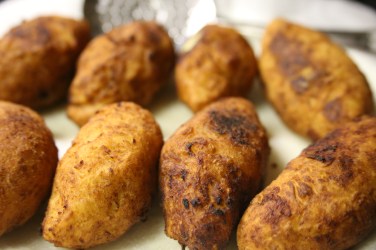 My Husband absolutely loves this! And if the way to a mans heart is through his stomach, this definitely is a quick escalator ride. As soon as we are done wishing each other Happy New Year, he wants to know when I will be making these and I oblige every year!


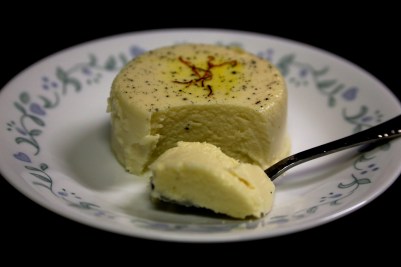
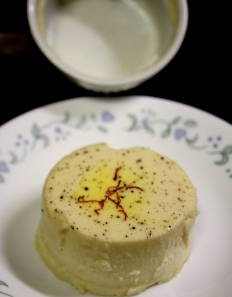 Back in the days, this was a slightly complicated process when milk and sugar had to be first simmered over slow heat till it became thick and creamy before mixing it with yogurt that was hung for hours. Now all you need is some condensed milk and some greek yogurt.


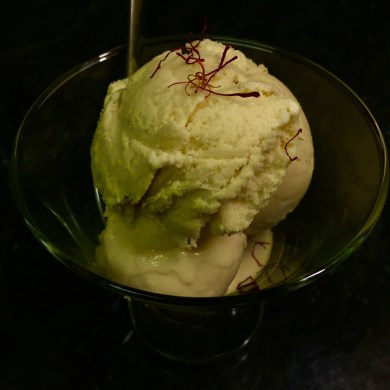

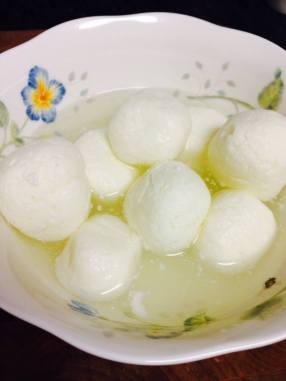 Roshogolla or Bengali Rasagulla is essentially spongy balls of indian cottage cheese (chhana) cooked in sugar syrup. There are various versions to the origin of this dessert, but this is the one I like, because this is the version my mom told me.
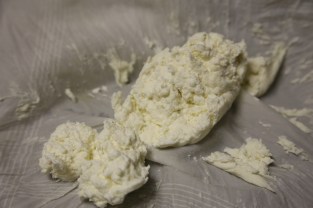 I do not have a sweet tooth, but this dessert has my heart. Its not fried and made from pure chhana (cottage cheese) and considered to be a safe comfort food when recovering from a fever or stomach upset (Not to mention the low calorie count per serving!). Since I grew up in Hyderabad and getting this from the Pada’r mishtir dokan (local sweet shop) was not really an option, my mom whipped some up in her kitchen. Recovering from a flu almost always involved mom feeding me some roshogollas and story telling.
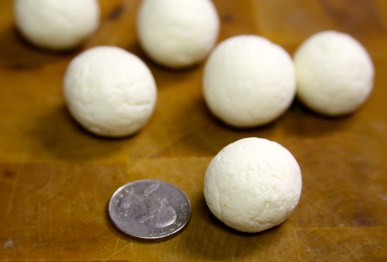 This is a recipe that a lot of people requested I post, so here goes. Let me start by saying that this dessert is a tricky one to master and you might not get perfect result in your very first try, don’t let that discourage you. Here are a couple things that I learnt:


 1 Cup Of Joy